
Reviewed · NOBORIBETSU & LAKE TOYA TRIPS
Noboribetsu: Orofure Pass Snowshoeing Tour
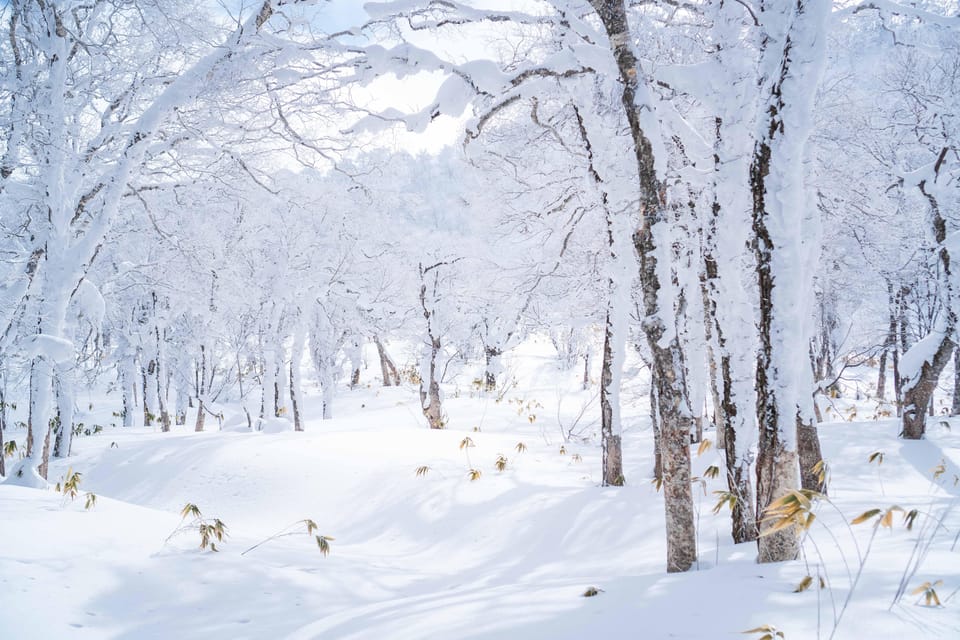
Orofure Pass turns a winter walk into something wonderfully strange. Snow freezes onto the trees until branches swell into white shapes known as snow monsters, and the route climbs through forest to a ridgeline with views toward Mt. Orofure, Mt. Yotei, and Lake Toya. I like the unusual scenery and the chance to see a quieter side of Noboribetsu beyond its famous hot springs. I also like that guide Aidan keeps the group small and helps first-time snowshoers learn the basics.
The main catch is that this is a real mountain outing, not a gentle stroll. You will walk uphill and downhill over uneven snow for several hours, and mountain weather can turn quickly. Warm outdoor clothing and decent fitness are essential, while jeans, cotton layers, skirts, and ordinary city shoes are poor choices.
Key points to know before booking
- Snow monsters at Orofure Pass: Heavy snow freezes to the trees, creating the tour’s most unusual winter sight.
- A five-hour mountain outing: The route includes forest walking, a ridgeline climb, viewpoints, a sheltered lunch stop, and the return journey.
- Small groups of up to seven: Aidan can give practical help with snowshoe technique and adjust his attention to the group.
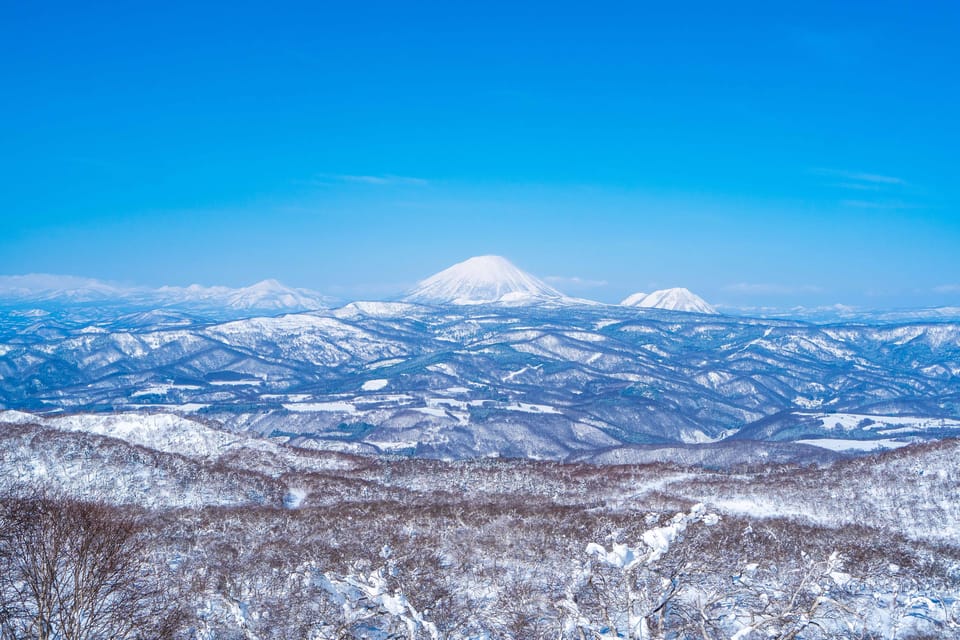
- Views beyond Noboribetsu: On a clear day, you may see Mt. Orofure, Mt. Yotei, the surrounding area, and Lake Toya.
- Gear and transport included: Snowshoes, poles, gaiters, pickup, drop-off, a hot drink, and a snack are provided.
- A winter activity with real limits: It is not suitable for children under 18, people with low fitness, or anyone with certain health or mobility concerns.
Why Orofure Pass is worth the half-day
Noboribetsu is best known for its hot springs and volcanic valley, but winter opens another door. Orofure Pass is about 30 minutes from town, close enough for a half-day outing yet far enough to leave the hotel streets behind. The pass receives heavy snowfall, which gives the forest its unusual shapes and keeps the route firmly in the world of winter sports.
I like the fact that the scenery here is not simply a blanket of white. The snow changes the trees themselves. Ice and powder build on the branches, making them look oversized and otherworldly. The snow monsters are the visual reward for choosing this particular route, rather than taking a standard resort walk.
The tour also gives you a chance to see Noboribetsu from above. The ridgeline views can include Mt. Orofure, Mt. Yotei, and Lake Toya. Clear weather matters, of course, and no mountain tour can promise a wide view every day. Still, the route offers interest even when cloud hides the distant peaks, since the forest and frozen trees are part of the experience.
A few more Noboribetsu tours and experiences worth a look
The drive from Noboribetsu to the snow
Pickup and drop-off are included, which is important here. You do not need to arrange your own ride to a snowy mountain pass, and the drive takes roughly 30 minutes from Noboribetsu. Look for a grey or black Mitsubishi Delica with number plate 207, and tell the operator the name of your hotel or accommodation.
That transfer keeps the outing simple. You begin near your accommodation, travel with the guide, and return to Noboribetsu after the walk. One practical point is worth noting: the listed drop-off is back in Noboribetsu, but Aidan has also helped participants reach an onsen or a station when it suited their plans. Treat that as a possible courtesy, not something included in the package.
The vehicle also means you are not carrying every piece of winter equipment on public transport. You will still need your own clothing, footwear, water, and daypack, but the large snow gear is supplied.
Learning to walk on snowshoes
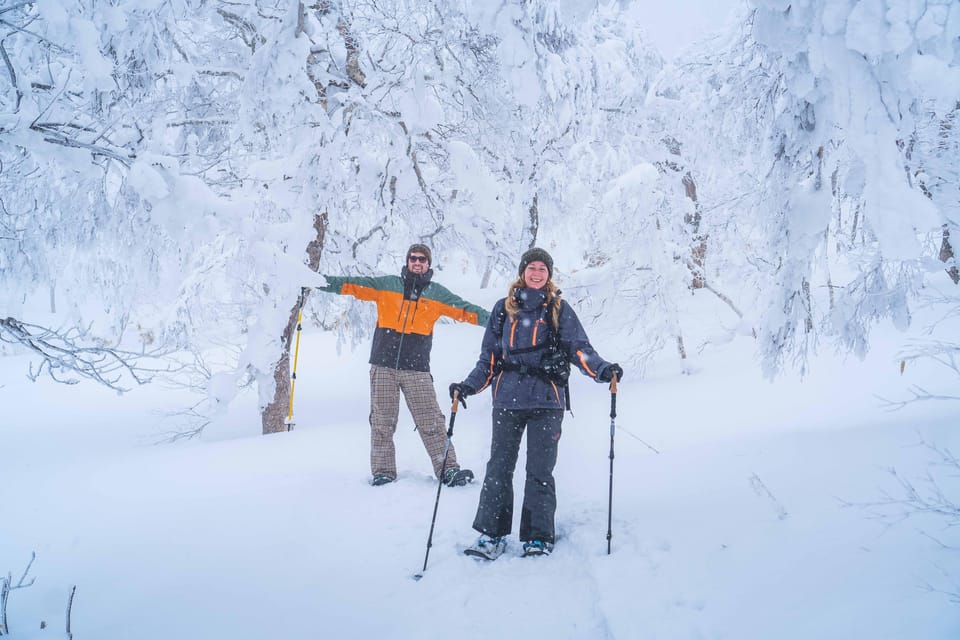
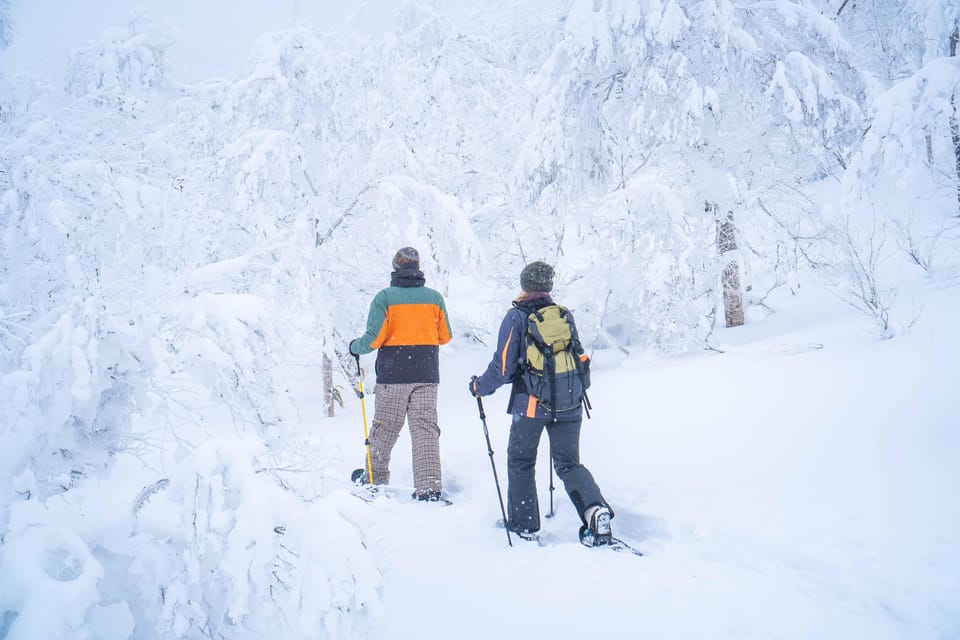
Snowshoeing is friendly to beginners, but it is not completely effortless. The snowshoes spread your weight over a larger area, helping you stay on top of deep powder. Poles add balance, and gaiters help keep snow out around your lower legs.
Aidan has worked with first-time snowshoers and gives practical instruction on how to move in the equipment. That matters during the first uphill and downhill sections, when your stride feels different from normal walking. You will need to lift your feet clearly, pay attention to the terrain, and use the poles rather than rushing.
The small-group limit of seven is a strong feature. A guide working with seven people can watch how everyone is coping, answer questions, and explain local scenery without shouting across a large party. English and Japanese guiding are available.
The route is physical. The tour information specifically warns that you should be able to walk up and down uneven terrain. It is not suitable for wheelchair users or people with mobility impairments, back problems, heart problems, a cold, or a low level of fitness. Those limits are worth taking seriously, since cold, snow, and an uphill route can make a minor problem harder to manage.
Through the forest to the snow monsters
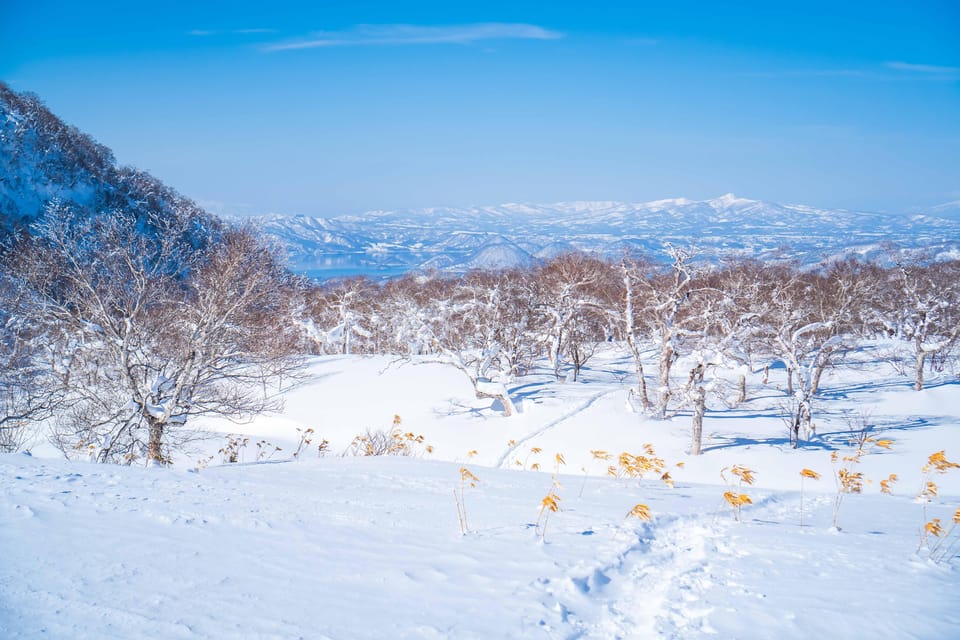
The walk begins in a forest setting, where the snow muffles the usual sounds and the trees carry thick winter deposits. This part of the route is more than a way to reach the viewpoint. It lets you get used to the snowshoes and see how the weather has shaped the forest.
As you climb toward the ridgeline, the snow monsters become the main attraction. These are not separate sculptures or a maintained park display. They are trees transformed by snow and ice. Their forms can be large, irregular, and slightly comic, which gives the walk a sense of discovery.
The route is appealing because the scenery changes as you gain height. In the lower forest, you are surrounded by trunks and branches. Higher up, the trees open toward the ridgeline and the views become broader. The climb also gives the outing a clear purpose, rather than making it feel like a short photo stop beside a road.
You should plan on getting warm as you move. The instructions recommend layers that can be added or removed, rather than one very heavy outfit. Avoid cotton, which holds moisture, and bring a windproof jacket, gloves, hat, and sunglasses. Even on a sunny day, glare from snow can be strong and the ridgeline may feel much colder than the forest.
The ridgeline views toward Mt. Yotei and Lake Toya
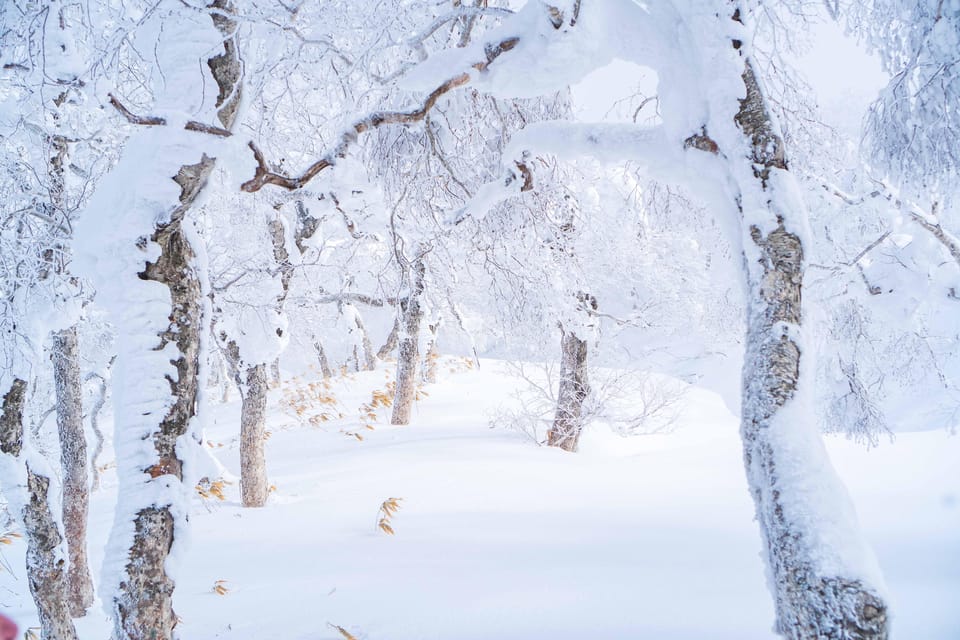
The high point of the outing is reaching the ridgeline beneath the snow-covered trees. This is where the strange shapes of the snow monsters meet the open winter panorama.
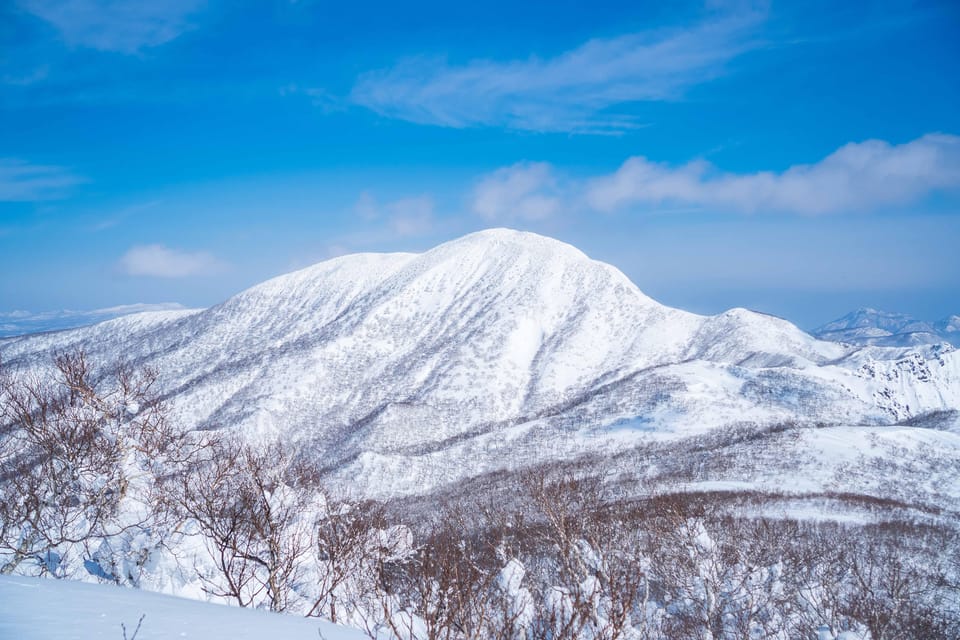
On a clear day, you may see Mt. Orofure, Mt. Yotei, and Lake Toya, along with the surrounding area. Mt. Yotei is especially appealing for anyone who enjoys Japan’s volcanic scenery, while Lake Toya adds a broad body of water to the view. The exact sightline depends on weather and visibility, so you should come for the full walk rather than book only for a guaranteed mountain photograph.
Mountain conditions can change quickly. The tour may be canceled or postponed if the weather becomes unsafe, and the guide can end the outing if an injury occurs or continuing is not sensible. That is not a flaw in the experience. It is the correct approach for a winter mountain activity, but it does mean you should keep some flexibility in your Noboribetsu schedule.

Lunch, a hot drink, and a sheltered pause
After the ridgeline section, you head back down and stop in a sheltered spot for lunch and a hot drink. The included food is described as a snack and hot drink, so you should not expect a full restaurant meal. Bring your own water and extra snacks, and pack a lunch if you need more food after several hours outside.
This break has practical value. A warm drink gives you a chance to thaw your hands and replace some energy before the return walk. The shelter also provides a pause away from wind and falling snow.
Aidan has sometimes added personal touches, including homemade cookies and a sourdough bread sandwich prepared by his wife. Those extras are not listed as guaranteed inclusions, so treat them as a pleasant possibility rather than a reason to assume a meal is provided. The reliable plan is to bring your own food and water.
What the $154 price really covers
At $154 per person, this is not the cheapest way to spend five hours in Hokkaido. The value comes from the parts that are awkward to arrange independently: transport to Orofure Pass, a guide, snowshoes, poles, gaiters, and a route through deep winter conditions.
The small group is important to the price. You are not paying only for equipment rental. You are paying for a guide who can teach snowshoe technique, watch the pace, explain the setting, and make a safe decision if conditions worsen. For a first snowshoe outing, that support may be worth more than saving money on a self-guided walk.
The tour also avoids the busy feel of a large organized group. Aidan has helped solo participants with hotel pickup, lunch preferences, and onward transport plans. That sort of flexibility can make the price feel fair, especially if you are traveling alone or have limited time in Noboribetsu.
Still, the value depends on your priorities. If you only want a brief snow photo stop, five hours and $154 may feel like too much. If you want a proper winter outing with transport, equipment, scenery, and personal guiding, the package is more convincing.
Clothing, footwear, and packing advice
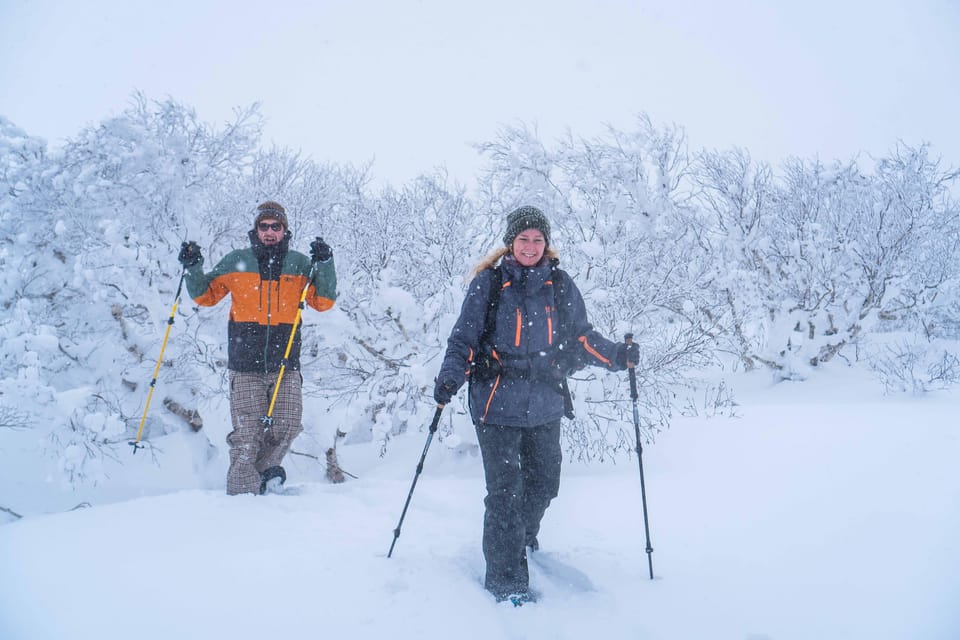
The operator supplies the snowshoes, poles, and gaiters, but not your clothing or footwear. The instruction to bring comfortable shoes should not be read as permission to wear thin city sneakers. You need footwear suitable for cold, snowy outdoor conditions.
Pack:
- Warm layers that can be removed as you heat up
- A windproof jacket
- Hat and gloves
- Sunglasses
- Water and extra snacks
- A small daypack
- Outdoor clothing that allows a full stride
Do not wear jeans. They restrict movement and can become cold and uncomfortable when damp. Skirts and dresses are also unsuitable. Cotton is a poor choice because it does not move moisture away from your body.
Your pack should stay light. The guide provides the main snow equipment, so you do not need to carry snowshoes or poles from your hotel. You do need enough clothing to handle changing conditions, since sunny weather at pickup does not guarantee calm weather at the pass.
Who will enjoy this tour most
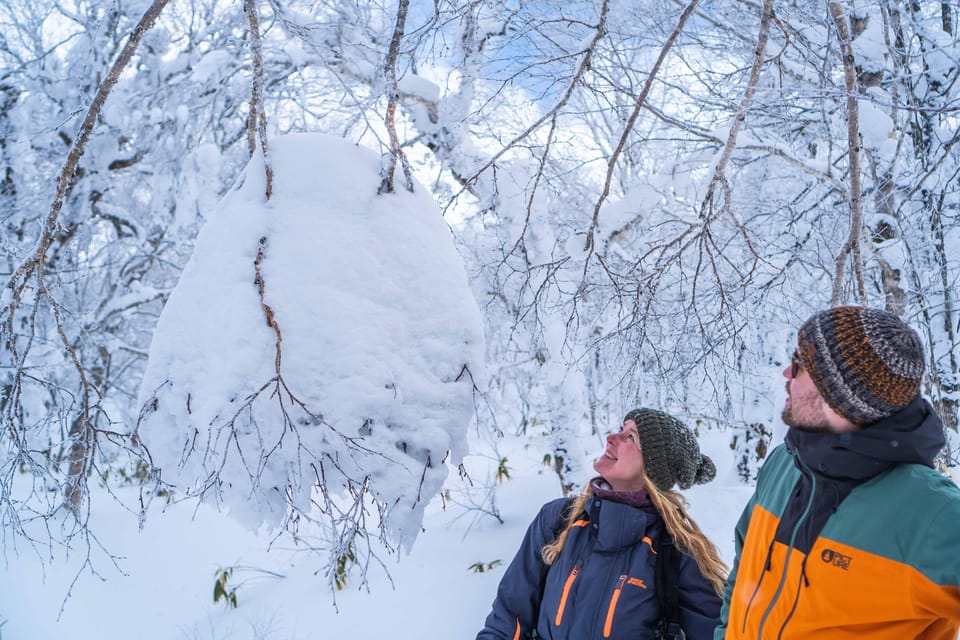
This outing fits an active adult who wants more than an easy winter walk. You should be comfortable with several hours outdoors, uphill and downhill movement, uneven ground, and changing cold-weather conditions.
It is a particularly good match for:
- First-time snowshoers who want instruction
- Solo visitors who value small groups and included transport
- Couples or friends seeking unusual winter scenery
- People staying in Noboribetsu without a car
- Anyone interested in snow monsters and mountain views
It is not designed for children under 18, wheelchair users, people with mobility limits, or people with back or heart problems. A low fitness level is also a poor match. You should prepare your own travel insurance, since Nobo Tours does not provide insurance for participants.
The guide’s style is part of the appeal. Aidan is described as friendly, funny, attentive, and easy to talk with. He has helped beginners feel prepared, explained the local environment, and taken photos during the walk. Those details matter most if you are nervous about trying snowshoes for the first time.
Booking flexibility and weather planning
You can cancel up to 24 hours before the activity for a full refund, and you can reserve now and pay later. That helps when your Hokkaido plans depend on weather, trains, or hotel changes.
Do not build a tightly packed schedule around the exact finish time. The activity lasts five hours, but mountain weather or an early finish for safety can affect the day. If conditions are poor, the tour may be canceled or postponed when possible.
A flexible plan also gives you room to enjoy Noboribetsu’s hot springs afterward. A warm bath is a natural follow-up to a cold, active morning, though any extra onsen visit is separate from the tour.
Should you book the Orofure Pass snowshoe tour?
Book it if you want a genuine winter activity near Noboribetsu, especially if you have never snowshoed and want a guide to show you how. The snow monsters, ridgeline, and possible views toward Mt. Yotei and Lake Toya give the walk a clear sense of place. Included transport and gear remove much of the planning trouble.
Skip it if you want a short, easy sightseeing stop, dislike cold-weather exertion, or cannot comfortably manage uneven uphill and downhill terrain. The tour asks for proper clothing, patience with mountain weather, and a reasonable fitness level.
For the right participant, the $154 cost is justified by the small group, equipment, transport, guide support, and access to scenery that is difficult to reach on your own. I would book it as a highlight of a Noboribetsu winter stay, while keeping the next part of the day flexible.
FAQ
Where does the snowshoe tour take place?
The tour takes place at Orofure Pass in Hokkaido, about 30 minutes from Noboribetsu.
How long does the activity last?
The full activity lasts five hours, including transport, the snowshoe walk, the break, and the return to Noboribetsu.
What can I see during the walk?
You can walk through a snowy forest and beneath snow monsters. From the ridgeline, views may include Mt. Orofure, Mt. Yotei, Lake Toya, and the surrounding area.
Are snowshoes provided?
Yes. Snowshoes, poles, and gaiters are included.
Is food included?
A hot drink and snack are included. You should bring your own water and snacks, and pack additional food if you need more than a light snack.
What should I wear?
Wear warm layers, outdoor clothing, a windproof jacket, gloves, a hat, and suitable comfortable footwear. Sunglasses are also needed. Avoid cotton, jeans, skirts, and dresses.
Can beginners join?
Yes. The guide provides help with snowshoe technique, and the activity has been used by people snowshoeing for the first time. You still need to manage uphill and downhill walking over uneven terrain.
How many people are in the group?
The group is limited to seven participants.
Is pickup included?
Yes. Pickup and drop-off are included. Look for a grey or black Mitsubishi Delica with number plate 207, and provide the name of your hotel or accommodation.
What happens if the weather is bad?
The tour may be canceled or postponed if bad weather occurs. If someone is injured or the guide decides it is unsafe to continue, the activity will finish early.
More Noboribetsu & Lake Toya Trips in Noboribetsu
More tours in Noboribetsu we've reviewed
Noboribetsu & Lake Toya Trips, compared.
 ★ 4.7Hokkaido Seasonal: Lake Toya & Noboribetsu Jigokudani ValleyFrom $551 day
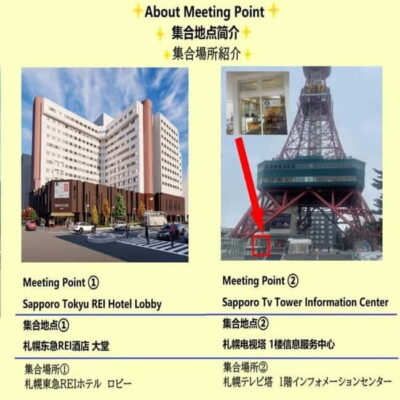 ★ 4.0Hokkaido Noboribetsu Lake Toya Tour from SapporoFrom $66
 ★ 5.0[Departure from Sapporo] Noboribetsu Jigokudani, Lake Toya, Cape Chikyu by private carFrom $404
 ★ 3.5Hokkaido Noboribetsu Lake Toya, Otaru Panoramic Tour From SapporoFrom $120
 ★ 5.0Lake Toya and Noboribatsu Hell Valley Private Day TripFrom $365
 ★ 4.51-Day Pass for Noboribetsu Date JidaimuraFrom $19
 ★ 5.0Hike Mt. Usu and visit Lake Toya Day TourFrom $156
 ★ 5.0Mt. Usu: Hike to the crater and see the stunning Lake Toya!From $161
Browse the lists this tour appears in