
Reviewed · SAPPORO CITY TOURS
Sapporo: Mt. Maruyama Hike & Okurayama Ski Jump
Sapporo’s best city views come from two very different mountains. This 10-hour outing pairs a quiet forest hike up Mt. Maruyama with the dramatic Okurayama Ski Jump, where a chairlift carries you to the same high perch used to watch ski jumpers launch toward the city.
I like the contrast between the two stops: Mt. Maruyama feels wooded and local, while Okurayama delivers a big, open view and a clear link to Sapporo’s Olympic past. I also like that transportation, the museum, and both chairlift rides are covered in the $153 price. The tradeoff is a full day with a fairly early start, and lunch, hiking clothes, footwear, water, and winter traction are your responsibility.
Key points
- Mt. Maruyama reaches 225 meters: The 2.5 km hike follows a forest path lined with 88 Kannon statues.
- The trail changes with the seasons: Cherry blossoms arrive in spring, cooler walking conditions suit June and July, autumn brings changing leaves, and winter offers snow-covered scenery with extra gear required.
- Okurayama gives you a ski jumper’s view: The 5 to 7 minute chairlift ride ends at an observation deck above an active competition hill.
- The Olympic Museum adds context: Interactive exhibits and sports simulations make the 1972 Sapporo Winter Olympics easier to understand.
- Transport is built into the day: You meet at Sapporo Station at 8 a.m. and return there after the mountain visits.
- The group can feel personal: One verified booking became a private outing, and the guide was described as fun.
Two Sapporo mountains, two very different views
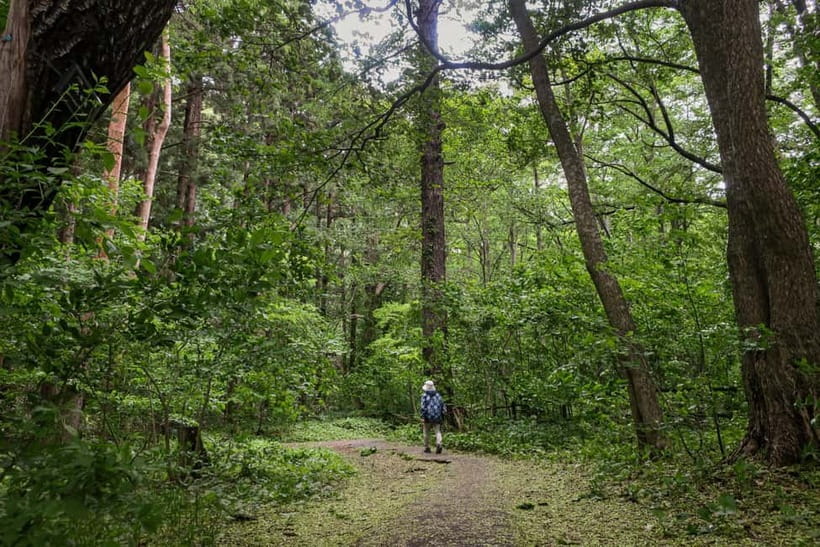
This experience works because Mt. Maruyama and Mt. Okurayama offer different kinds of mountain time. Maruyama is a real walk through old-growth forest, with a modest summit and occasional city views. Okurayama is more engineered and theatrical, with a chairlift, a ski-jump structure, a museum, and a wide view across Sapporo.
You are not signing up for a wilderness expedition. Mt. Maruyama rises only 225 meters, or 738 feet, but the path has rocky sections and requires steady walking. The overall day lasts about 10 hours, so the challenge is not just the height. It is the combination of an active morning, public transport, lunch, museum time, and the second mountain in the afternoon.
I see this as a strong choice if you want a break from central Sapporo without giving up the city entirely. You still return to the station, but you spend much of the day in places where the city’s geography, wildlife, and Olympic identity come together.
A few more Sapporo tours and experiences worth a look

Meeting at Myomu before 8 a.m.
The day begins in front of Myomu, the circular white stone structure outside the South Exit of Sapporo Station. After leaving the main JR gates, turn left and walk toward the South Exits. Myomu is close by, and the English-speaking guide wears a Snow Monkey Resorts tour tag.
Be there at exactly 8 a.m. This is not a loose come-anytime meeting. The group has several transport connections and timed visits ahead, so a late arrival can affect the whole day. I would allow extra time inside Sapporo Station, especially if you are unfamiliar with its large underground passages and many exits.
Transportation from Sapporo Station to the two mountain areas and back is included. That matters more than it may first appear. You do not need to work out separate fares or decide how to connect Maruyama with Okurayama after a morning hike. The guide handles the movement between stops while you focus on walking and sightseeing.
The transport sections take roughly 35 minutes at the beginning, 30 minutes between the mountain areas, and 45 minutes on the way back. Traffic and busy periods can change those estimates, so keep the evening after the tour reasonably open.
Mt. Maruyama’s 88 Kannon statues
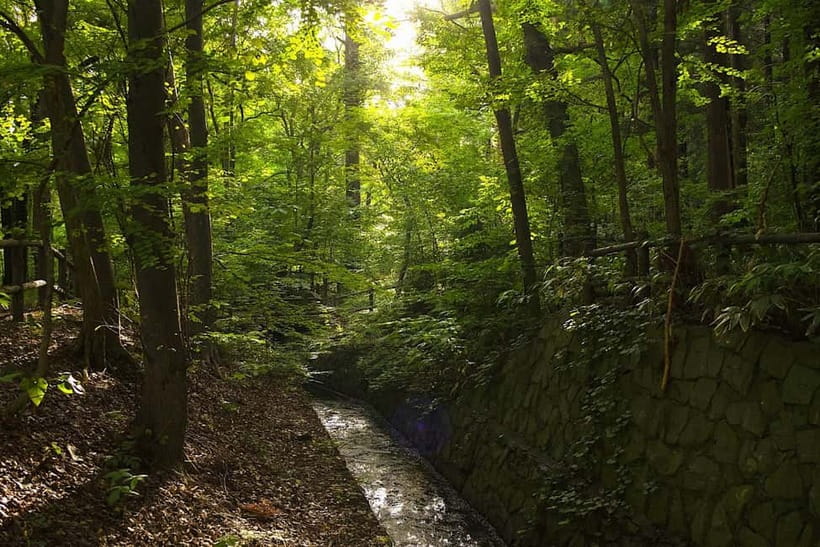
The morning hike begins at Maruyama hachi ju hachi kashodai shido, a path associated with 88 statues of Kannon, the Buddhist figure linked with mercy. These statues give the walk a clear sense of place. You are not simply climbing a hill for a viewpoint. The route carries religious and cultural detail along with the forest scenery.
The hike covers about 2.5 km and includes the climb up and back down. The walking portions are listed as roughly 115 minutes and one hour, with time for a break, photographs, and sightseeing. The path can be rocky, so comfortable hiking shoes are important. Ordinary city sneakers may not be the best choice, particularly in wet or snowy conditions.
The forest is one of the main reasons to take this tour. The area can show a range of plant and animal life, including squirrels, foxes, small deer, woodpeckers, and other birds. Wildlife sightings are never guaranteed, but the possibility adds interest to a walk that might otherwise seem like a simple urban hill.
The guide asks you to stay close to the group, avoid loud noises, and report any discomfort at once. Those instructions are practical. Foxes, squirrels, and deer can appear suddenly, and a quiet group has a better chance of noticing birds and other woodland life.
What the summit view is really like
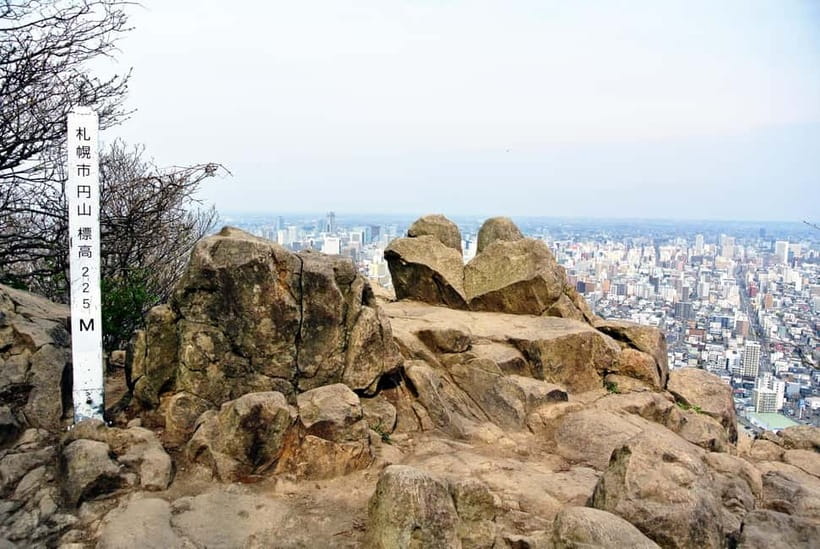
Mt. Maruyama’s summit is surrounded by trees, so do not expect an uninterrupted panorama in every season. You get glimpses of Sapporo along the trail, and views improve in late autumn or early spring when the foliage is thinner. From suitable openings, you can see downtown Sapporo, Ishikari Bay, and distant mountains.
This is a useful point when setting expectations. Maruyama is not the main viewing platform of the day. Its reward is the forest walk, the statues, seasonal changes, and the feeling of moving from the city into a wooded setting. The view is an added benefit rather than the whole purpose.
Spring brings cherry blossoms. June and July are noted as comfortable months for walking. Autumn offers changing colors, while winter creates a quiet snow-covered setting. Winter also takes more time and requires crampons or spikes. The tour is available year-round, but the experience changes sharply with the weather.
Bring bottled mineral water and a very light snack for the hike. Lunch comes later, after the morning walk, so you should not depend on the meal break to get you through the climb. In warm months, insect repellent and other personal health items are not supplied, so pack what you need.
Lunch is a useful pause, not a free extra
After the Maruyama hike, the schedule allows about an hour for lunch and rest. Lunch is not included in the $153 price, and neither are food, drinks, or snacks.
That arrangement gives you control over what you eat, but it also means you need to budget for the meal separately. Since the exact lunch location and menu are not specified, bring enough money and do not assume food will be provided as part of the tour. A small snack in your day bag is still wise for the trail.
The break also has a practical purpose. You have a second mountain and a museum visit ahead. Treat the lunch stop as time to drink water, eat properly, and reset your legs rather than as a quick photo stop.
A few more Sapporo tours and experiences worth a look


The Sapporo Olympic Museum puts the ski jump in context
The second part of the day moves to the Okurayama Ski Jump Facility and the attached Sapporo Olympic Museum. Sapporo hosted the 1972 Winter Olympics, the first Winter Games held in Asia. That fact gives the museum real local importance, not just a collection of old sports memorabilia.
The museum uses historical objects, interactive displays, and simulations connected with ski jumping and speed skating. For families, this can be the most hands-on part of the day. You can learn about the competition while also getting a sense of the physical demands of winter sports.
I like the order of these visits. Seeing the museum before the jump helps you understand why Okurayama matters. Then, when you ride up to the observation deck, you can look at the hill as a working competition site rather than just an unusual structure on a mountain.
The museum visit is planned for about an hour. If you have little interest in sports history, that may feel like a long stop. If you enjoy Olympic stories, engineering, or interactive exhibits, it gives the afternoon more substance than a simple ride to a viewpoint.
Riding the chairlift above Okurayama
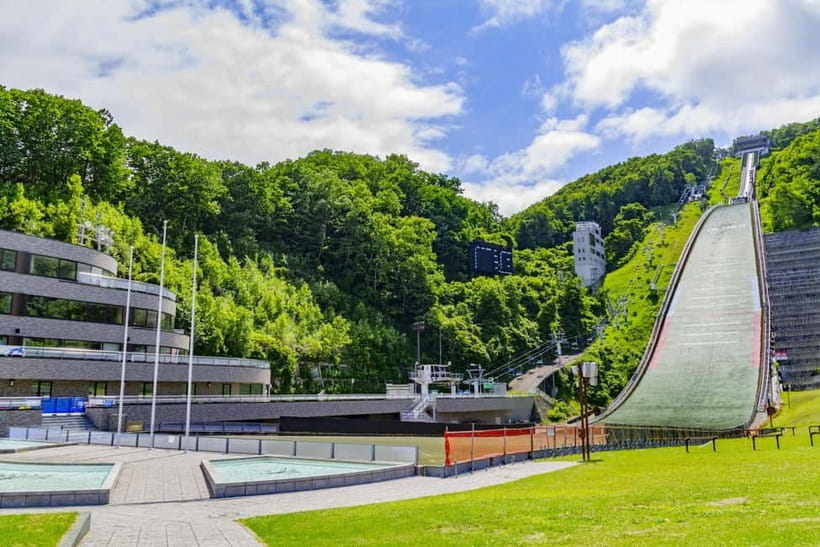
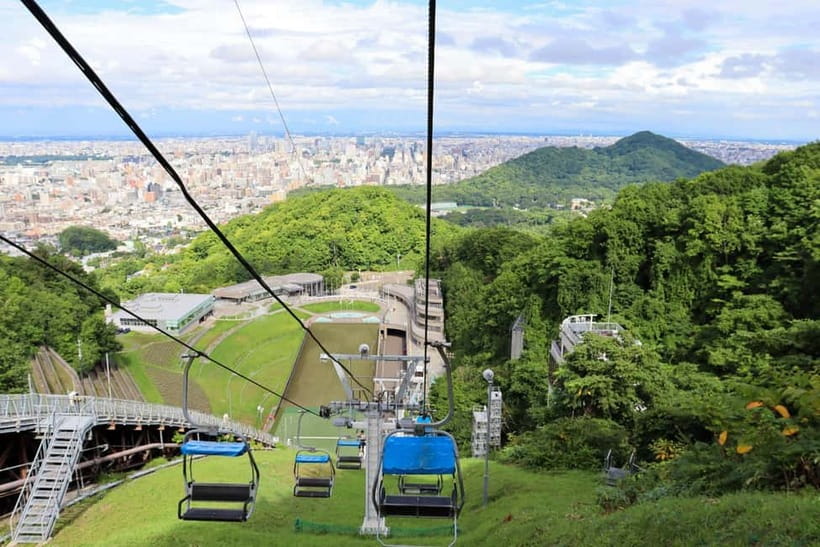
From the museum, you walk to the adjoining Okurayama Ski Jump. The facility was built for the 1972 Olympics and remains an active competition venue. Mount Okura reaches 307 meters, or 1,007 feet, and the hill has a size of 137 meters with a K-point of 123 meters.
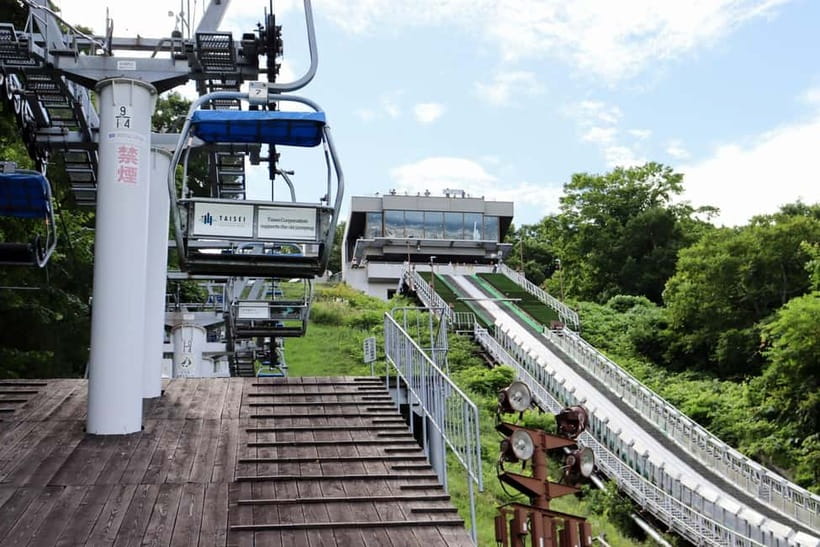
You ride the chairlift for about 5 to 7 minutes to reach the observation deck. The ride itself is part of the experience. The angle and height make it easier to understand what ski jumpers face, even though you are traveling up in a chair rather than launching down the track.
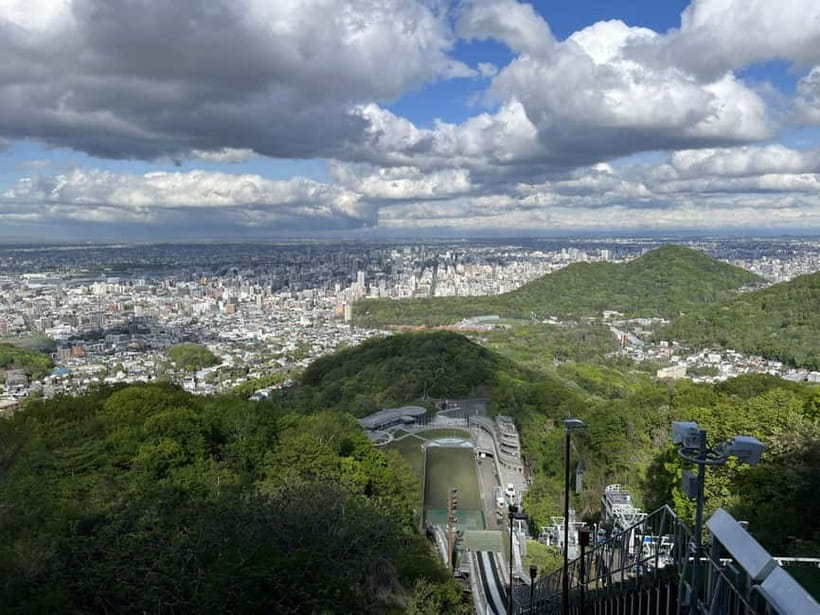
At the top, plan on roughly an hour. The observation deck offers broad views over Sapporo and includes a cafe for refreshments. The city view here is more open than the wooded outlook on Mt. Maruyama, making Okurayama the stronger stop for photographs.
One especially good possibility is seeing athletes train or compete below. A verified booking on January 29, 2026, happened to coincide with ski jumpers at the stadium. That kind of sighting depends entirely on the schedule and weather, so treat it as luck rather than a promised feature. Still, the active venue gives the stop more energy than a retired Olympic monument.
You take the chairlift back down after the observation stop. The return ride gives you another angle on the hill and the city, though anyone uneasy with chairlifts should consider that this is an essential part of the visit.
How much value does the $153 price offer?
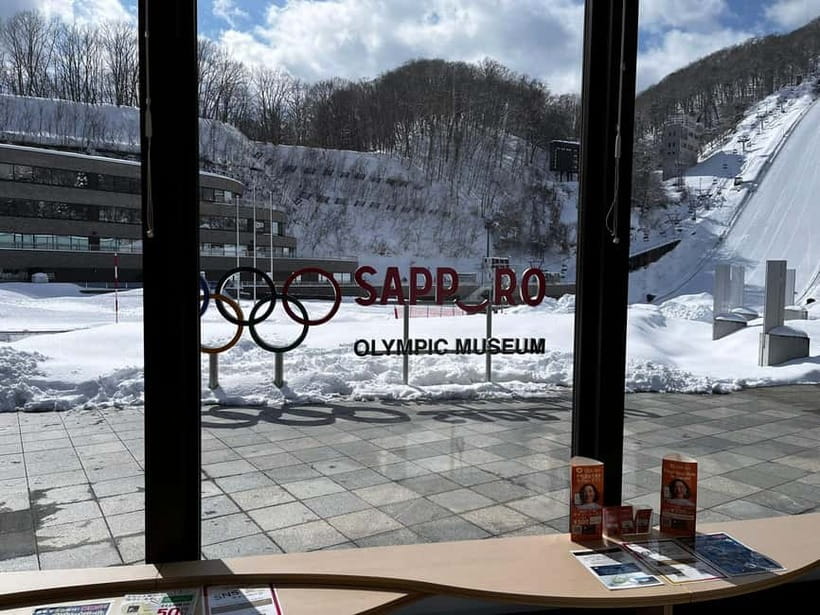
At $153 per person, this is not a cheap city walk. It is also more than a simple admission ticket because the price includes transport from Sapporo Station, an English-speaking guide, entry to the Olympic Winter Museum, and the Okurayama chairlift tickets.
The value depends on how much structure you want. You could visit individual Sapporo sights independently, but you would need to arrange the transport, manage the timing, find the Maruyama trail, and connect the morning hike with Okurayama. This tour bundles those pieces into one long day.
I think the price makes the most sense for a first visit to Sapporo, for anyone who prefers English guidance, or for families who want a mix of outdoor activity and indoor exhibits. It is less compelling if you already know the city, enjoy planning public transport, or want a short and inexpensive walk.
Lunch and personal equipment are extra. You also need to provide suitable clothing, footwear, water, snacks, and winter traction. Add those costs and preparations to your budget before deciding.
Who will enjoy this day most?
You should be comfortable walking on uneven ground for several hours across the day. The tour is not suitable for wheelchair users, and the rocky sections make proper shoes more important than fashionable ones.
I would recommend it to:
- People who want nature without leaving Sapporo for a remote area
- Families interested in Olympic sports and interactive museum displays
- Visitors who want an English-speaking guide and included transport
- Photographers looking for both forest scenes and city panoramas
- Anyone curious about the scale and angle of a real ski-jump hill
I would think twice if you dislike early starts, have difficulty with rocky trails, or want a relaxed day with long cafe stops. The schedule includes breaks, but the day keeps moving from station to trail, lunch, museum, chairlift, and bus.
The season also matters. Summer and early autumn should be easier for most walkers, while winter has the strongest quiet mountain atmosphere but demands more preparation. Crampons or spikes are required for winter hikes, and the schedule may take longer in snowy conditions.
Weather, wildlife, and small preparations
Wear clothing suited to the season, not just to the temperature at Sapporo Station. Mountain conditions can feel different, and the tour runs outdoors for a substantial part of the day.
Pack:
- Comfortable hiking shoes with good grip
- Bottled mineral water
- A light trail snack
- Seasonal clothing
- Crampons or spikes for winter
- Insect repellent or other personal health items you may need
Keep your phone and camera ready, but do not let photography pull you away from the group. Sudden wildlife encounters are possible, and the guide’s advice to stay together and keep noise down is worth following.
The schedule is an estimate. Weather, traffic, and crowded periods can affect the timing. The outdoor portions are the most weather-sensitive, while the museum gives the day some indoor balance.
Should you book the Mt. Maruyama and Okurayama tour?
Book it if you want one organized day that combines a genuine forest hike, Sapporo city views, Olympic history, and a chairlift ride above an active ski jump. The strongest feature is the contrast between the quiet Kannon-lined path at Mt. Maruyama and the wide, engineered view from Okurayama.
The $153 cost is reasonable for you if included transport, admission, and an English-speaking guide save you planning time. It is not the right pick for a low-cost stroll or a soft-paced sightseeing day. Arrive ready to walk, bring your own lunch money and gear, and treat a chance sighting of ski jumpers as an extra.
One verified booking became a private tour because the participant was alone in the group, and the guide was described as fun. Group size can vary, but the experience has room to feel personal. For an active visitor who wants to see a less familiar side of Sapporo, this is a well-balanced full-day choice.
FAQ
Where does the tour meet?
Meet in front of Myomu, the circular white stone structure outside the South Exit of Sapporo Station.
What time should I arrive?
You should be at the meeting point at exactly 8 a.m.
Is transportation included?
Yes. Transportation from Sapporo Station to the tour destinations and back to Sapporo Station is included.
Is lunch included?
No. Lunch, drinks, food, and snacks are not included.
How long is the Mt. Maruyama hike?
The hike covers about 2.5 km and includes the route up and back down Mt. Maruyama.
Is the hike available in winter?
Yes. The hike operates in all seasons, but winter hikes require crampons or spikes and may take more time.
What should I wear for the hike?
Wear clothing suitable for the season and comfortable hiking shoes. Some parts of the trail are rocky.
What does the Okurayama chairlift include?
The tour includes the chairlift tickets up to the observation deck and back down. The ride up takes about 5 to 7 minutes.
Is the tour suitable for wheelchair users?
No. The experience is not suitable for wheelchair users.
More Hiking & Trekking Tours in Sapporo

More Ski & Snowboard Days in Sapporo
More Sapporo City Tours in Sapporo

More tours in Sapporo we've reviewed






Sapporo City Tours, compared.
 ★ 5.0Sapporo Bar Hopping Food TourFrom $108
 ★ 5.0Sapporo Private Tour with a Local – Highlights & Hidden GemsFrom $109
 ★ 4.9Sapporo: Sumo Show Experience with Japanese food & PhotoFrom $772 hours
 ★ 5.0Mondo’s most popular plan! Experience making soba noodles and the king of Japanese cuisine, tempura, in Sapporo!From $85
 ★ 5.0【Private Car】Asahiyama Zoo, Blue Pond, Shirahige Falls, Ningle Terrace (from Sapporo)From $465
 ★ 4.0Hokkaido Noboribetsu Lake Toya Tour from SapporoFrom $66
 ★ 5.0Sapporo 6hr Private Tour with Government Licensed GuideFrom $155
 ★ 4.6From Sapporo: Hokkaido Highlights Day TripFrom $64
Browse the lists this tour appears in