
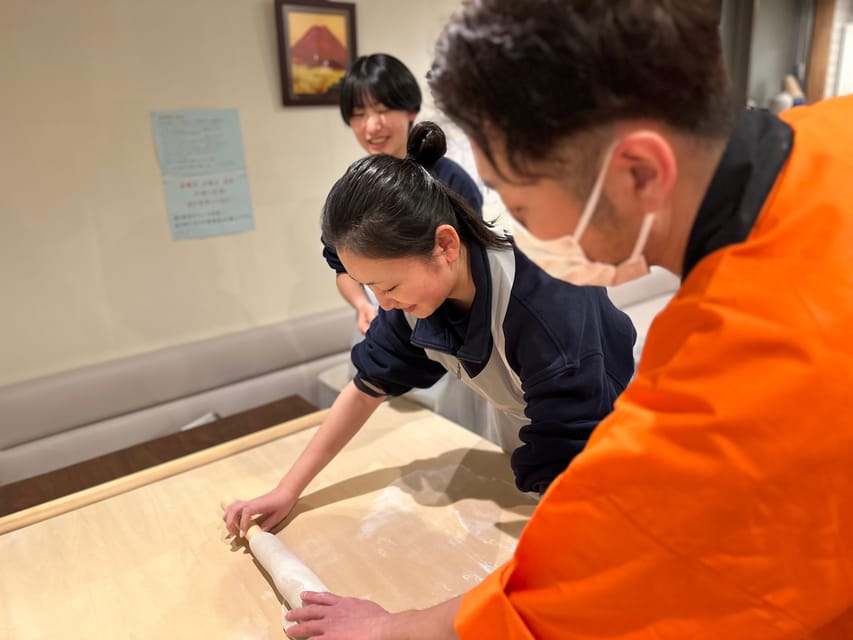
Reviewed · SOBA & COOKING CLASSES
Authentic Handmade Soba Experience!
The best part of this Sapporo experience is that you make lunch in a working handmade soba restaurant, not in a tourist studio. You mix Hokkaido buckwheat flour, roll the dough, cut the noodles, then eat what you made.
I like the small private-group format and the patient attention from the Mondo team. I also like that the class teaches the proper way to eat soba, including soba-yu, the hot cooking water served after the noodles.
The main drawback is timing. The actual noodle-making portion can feel short, and one past participant was surprised to pay for extra food to mix with the noodles. At $70 per person, this is best for people who value a local food lesson, not simply a cheap lunch.
Key points to know before booking
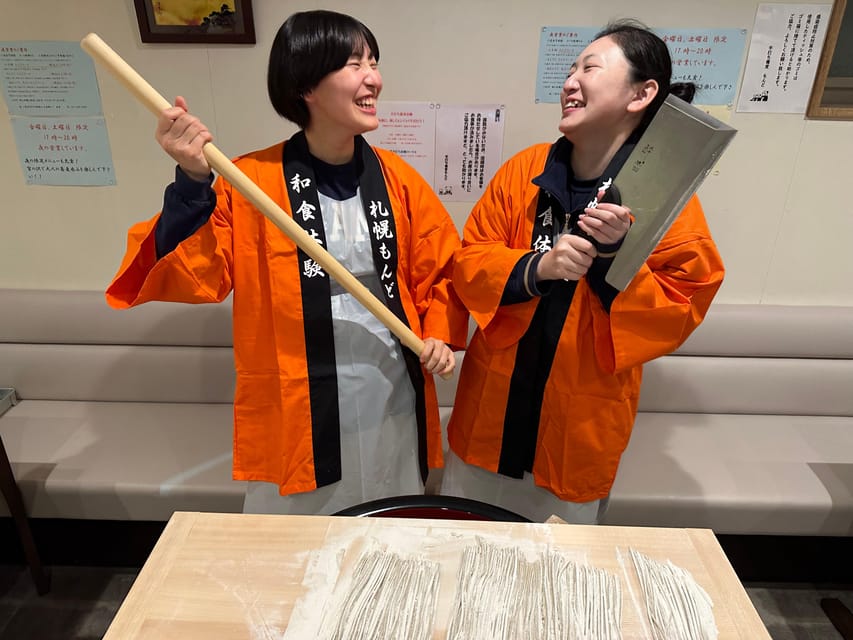
- You make noodles from Hokkaido buckwheat flour, then eat the soba you prepared.
- The class takes place at Teuchi-Soba Mondo, a local lunch restaurant in Hassamu, west of central Sapporo.
- The session is private, with Japanese and English instruction from the restaurant team.
- The full activity lasts about 60 to 75 minutes, but the hands-on cutting section may be brief.
- Soba-yu is part of the lesson, giving you a look at a Japanese dining custom many visitors miss.
- A minimum of two adults is required, and the price is $70 per person.
Making lunch at Teuchi-Soba Mondo
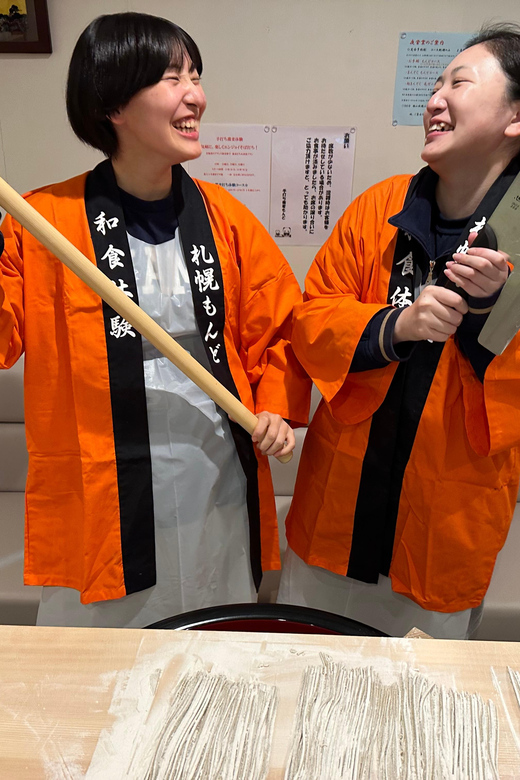
Soba is one of Japan’s three major traditional foods, along with sushi and tempura. It has been part of Japanese food culture for centuries, with noodle-making traditions reaching back to the Edo period.
At Teuchi-Soba Mondo, you are not just shown a finished bowl. You take part in the basic work behind it. The process starts with buckwheat flour from Hokkaido, Japan’s leading buckwheat-producing region.
That local connection gives the class a useful sense of place. Hokkaido is not simply the setting for the meal. Its buckwheat is central to the food you are making. You get to handle the flour, watch it change into dough, and see how much care is needed to produce even noodles.
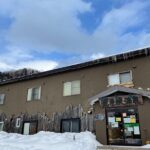
The restaurant is called Teuchi-Soba Mondo, and its signage and banners mark the meeting point at 9-chōme-17-28 Hassamu 6 Jō. You check in there before the session begins, and the team confirms your ticket.
This is in the Hassamu area of Sapporo rather than beside the city’s main sightseeing streets. That location matters. You will need to plan your route carefully, but you also get an experience away from the usual central Sapporo circuit. One participant particularly enjoyed being outside the city center and seeing a more local side of Sapporo.
A few more Sapporo tours and experiences worth a look
Mixing, rolling, and cutting the dough
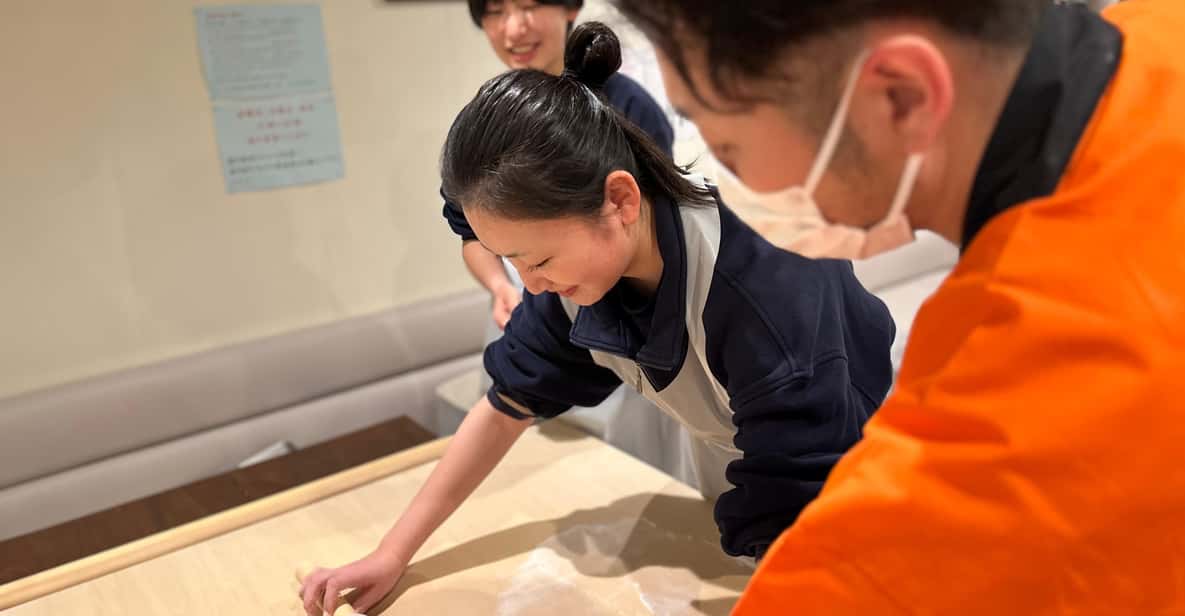
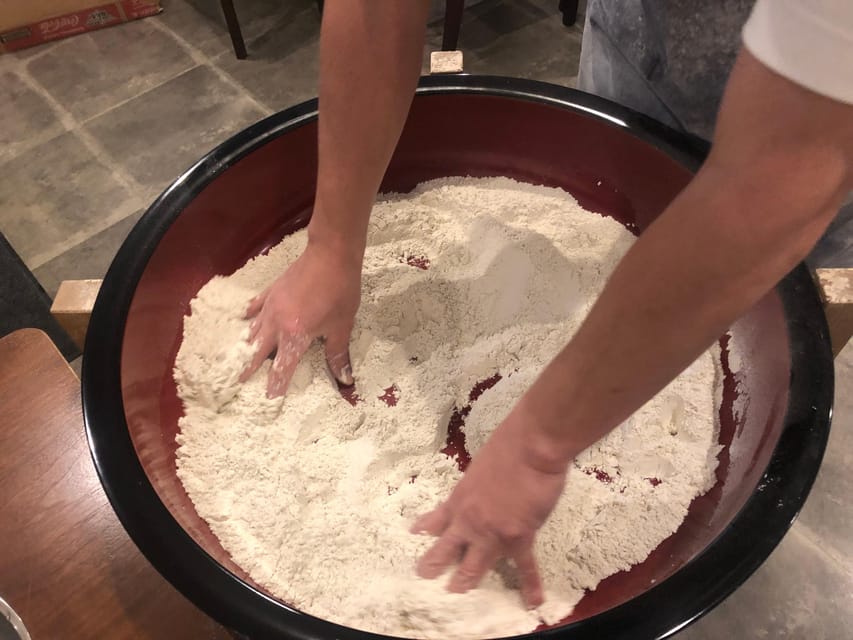
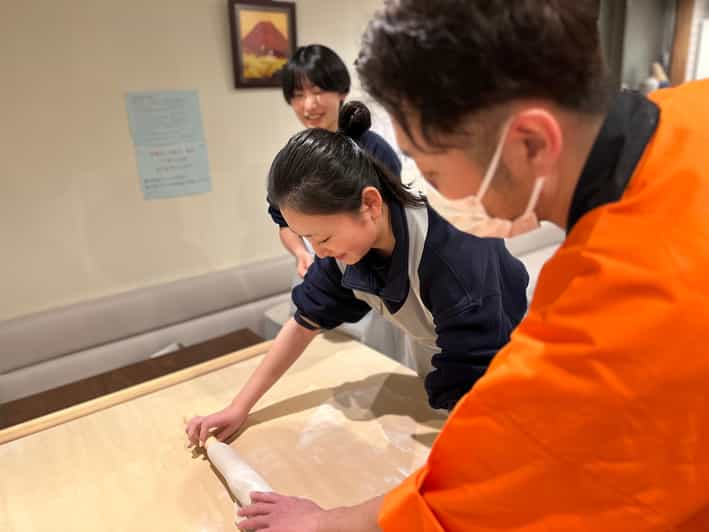
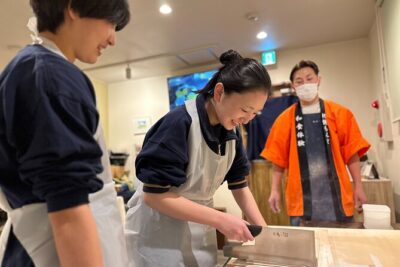
The hands-on portion covers three basic jobs: mixing the buckwheat flour, rolling the dough, and cutting it into strands. Each step looks simple until you try to keep the dough even and the noodles consistent.
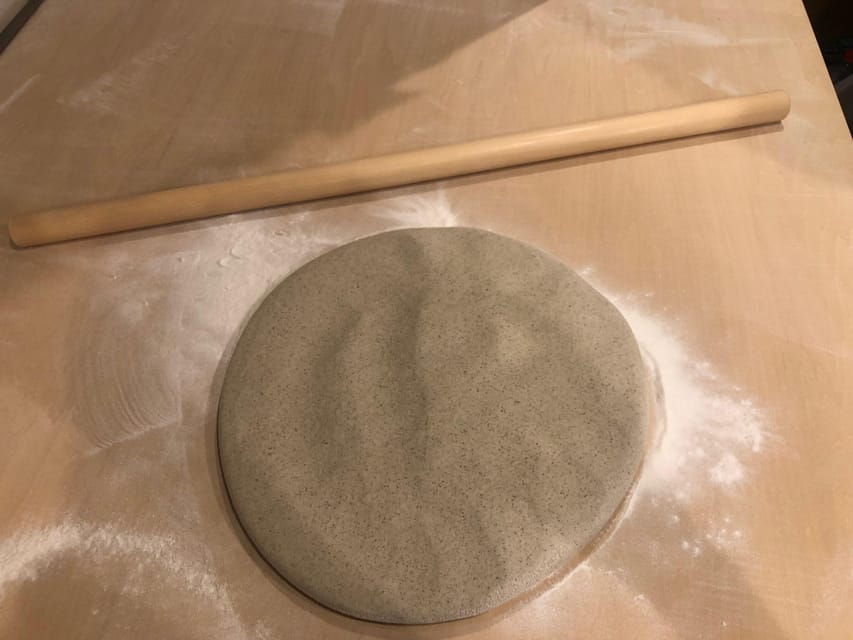
The flour mixture needs to become workable dough without losing its texture. You then roll it out and carefully cut the sheet into noodles. This is the part where the chef’s guidance matters most. The Mondo team provides the tools and shows you how the process works, so you are not left guessing.
The equipment also helps explain why this is not an everyday home activity for many Japanese people. One participant noted that even many Japanese people do not make soba because they lack the special tools or enough space. The restaurant gives you access to both.
The format is private, which should make the lesson easier to follow. You can focus on your own dough and ask questions in Japanese or English. The experience is led in both languages, though the supplied information does not identify the individual chefs by name.
Keep your expectations realistic. The class is designed as a short food experience, not a full professional training course. A past participant felt that the actual noodle-making section was very short. You will get a taste of the craft, not enough time to master it.
That is not necessarily a flaw. Soba dough can be demanding, and a short class lets you enjoy the meal without turning lunch into a lengthy workshop. Still, if you want extended instruction or repeated attempts, this may feel limited.
Eating the soba you made
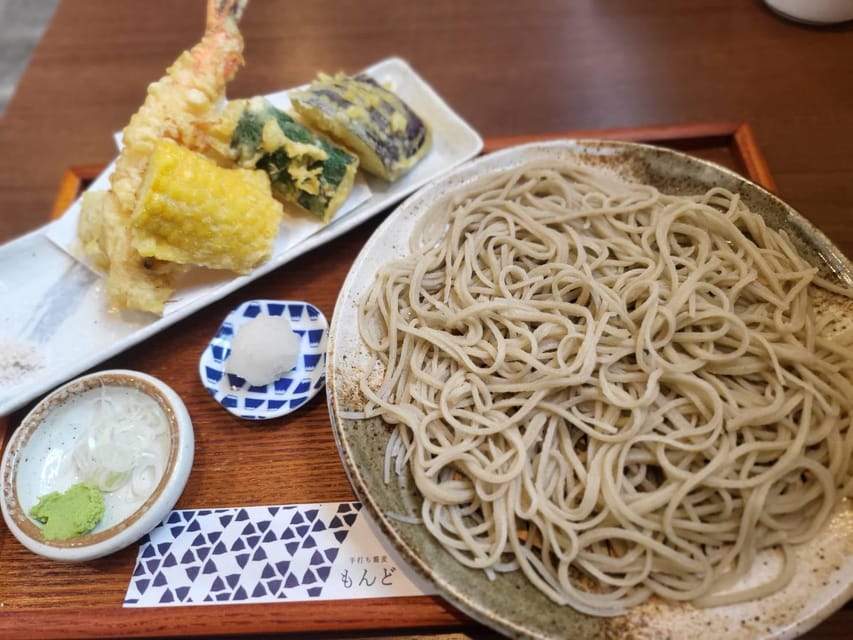
After the preparation, you eat the noodles you made. That is the payoff, and it gives the activity more weight than a simple demonstration.
Fresh noodles are also a useful lesson in texture. You can connect the flour, rolling, and cutting work with the food in front of you. The meal becomes a direct result of your effort rather than a separate restaurant stop.
The restaurant is open for lunch and is popular with local diners, so the meal takes place in a genuine soba setting. The chefs aim to make Japanese food feel approachable to people from outside Japan, but the experience itself is built around the restaurant’s normal specialty.
There is one cost detail to watch. One participant expected the made noodles to form the entire meal and was surprised to find that additional food to mix with the noodles had to be purchased. The food was considered very good, but the extra purchase changed the expected value.
Because of that, ask exactly what your $70 includes before booking. The supplied details clearly say that you can eat the soba you make, but they do not spell out every accompanying dish or topping. If you are comparing this with an ordinary restaurant lunch, remember that you are paying for instruction, equipment, private attention, and the meal, not only for a bowl of noodles.
Learning the proper way to eat soba
The class does more than show you how to produce noodles. You also learn how soba is eaten.
The teaching includes the proper way to enjoy the finished noodles and introduces soba-yu, the hot water left from cooking the soba. This is traditionally served after the noodles, often with dipping sauce mixed into it. Here, it gives you a small but memorable look at the full meal ritual.
For first-time visitors, this part can be as valuable as the cooking. Japanese dining customs are often easiest to understand when you see them in their normal setting. You are not memorizing rules from a guidebook. You are learning what to do at the table where the food was prepared.
The lesson also places soba in its wider cultural setting. You hear about the long history of the dish and the place it holds among Japan’s classic foods. The focus remains practical, though. You make, eat, and understand the noodles in one compact session.
Why the private format matters
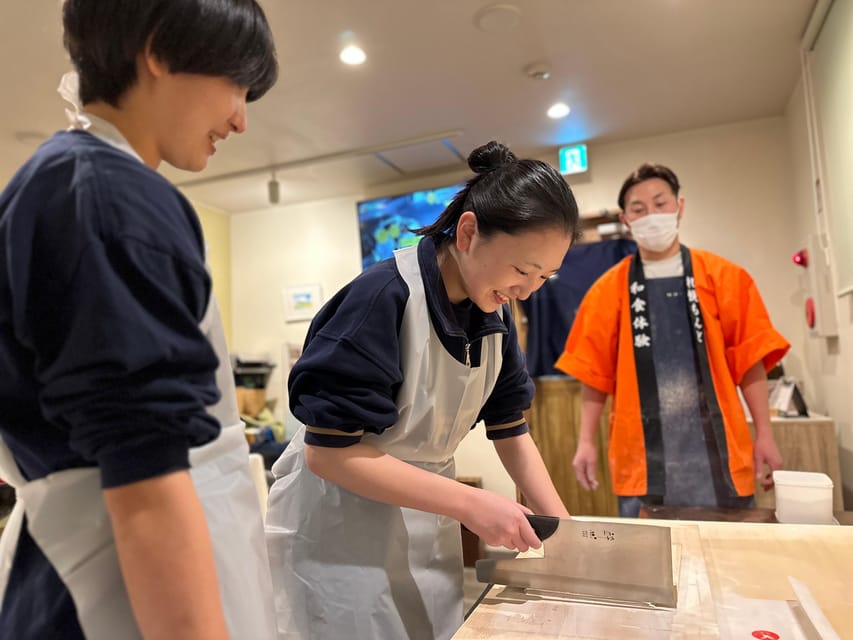
The activity is offered as a private group. That is useful for families, couples, and small groups who want direct help rather than a large class where the chef must divide attention among many people.
A Singapore couple praised the dedicated attention they received and described the Mondo team as warm and kind. That fits the structure of the experience: the restaurant team can watch your work closely and help you understand each step.
The private setup is also good for children. A family of six, including an eight-year-old child, found the experience suitable for their group. The information does not give a minimum age, so families should confirm details before reserving, but the hands-on format can work well for children who enjoy making food.
One family also included a person with a gluten allergy and said the need was handled. Soba is made from buckwheat, but restaurant dishes can involve other ingredients or shared preparation concerns. If this affects you, tell the provider clearly before the class and confirm what can be accommodated. Do not rely on the word buckwheat alone as a guarantee of a gluten-free meal.
The class also works for people who want a quieter food activity. It is not a loud market tour or a rushed series of tastings. You stay in one restaurant and focus on one traditional dish.

The Hassamu setting and what to plan
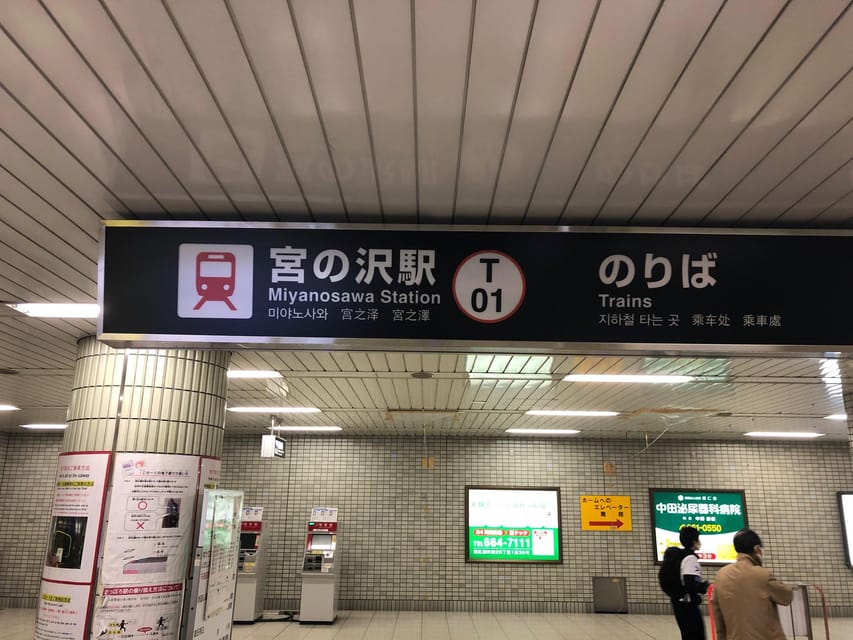
The meeting point is 9-chōme-17-28 Hassamu 6 Jō, at Teuchi-Soba Mondo. Look for the restaurant’s signs and banners, then check in so the team can confirm your ticket.
The experience is outside central Sapporo. That can be a benefit if you have already visited the main shopping and sightseeing areas and want something more local. It can also be inconvenient if your schedule is built around attractions in the city center.
Allow time to reach Hassamu and avoid booking the class too tightly against another appointment. The activity itself is advertised as one hour, while the guided class is described as 75 minutes. Treat it as a 60 to 75 minute commitment, with extra time needed to arrive and leave.
Starting times vary, so you need to check availability for your date. The restaurant serves lunch, which makes this easy to pair with a morning activity or an afternoon in another part of Sapporo, but the exact timing will depend on the available start time.
The provider does not include transportation in the information supplied. Plan your own route to the address and confirm the best way to reach it before setting out.
Is $70 a fair price?
At $70 per person, this is more expensive than simply ordering soba at a restaurant. That comparison is fair, but incomplete.
The fee pays for a private activity, English or Japanese instruction, access to professional tools, the flour and ingredients used in the lesson, and the chance to eat your own noodles. You are also paying for time with the restaurant team and for a cultural explanation of soba and soba-yu.
I consider the price reasonable for someone who wants an unusual food activity and values personal instruction. It is less attractive if you only want a satisfying bowl of noodles. The extra-food issue makes it especially important to confirm what is included.
The high rating of 4.8 from 11 recorded ratings points to strong overall satisfaction, with praise focused on the fun, the friendly Mondo team, the personal attention, and the unusual chance to make soba with proper restaurant tools. The small number of ratings means I would treat the score as encouraging rather than definitive.
You also get a meal connected to Hokkaido’s buckwheat production. That regional link adds value for food-focused visitors who want more than a generic cooking class.
Who will enjoy this soba class most?
I would recommend it most strongly to:
- Food lovers who want to understand how a Japanese staple is made.
- Couples and families who prefer private instruction.
- Visitors who have already seen central Sapporo and want time in a less tourist-focused area.
- People interested in traditional Japanese food customs.
- Children and adults who like practical, hands-on activities.
- Visitors who want to eat a meal they helped prepare.
It is a weaker match for you if your schedule is packed, if you dislike short workshops, or if you expect a large amount of food for the price. It may also disappoint anyone hoping for a long technical lesson with several rounds of noodle-making.
The activity is also not a substitute for a full cooking course. You learn the main stages and get the satisfaction of making noodles, but the class is compact.
Booking and cancellation details
You need at least two adults to book. The group is private, and instruction is available in Japanese and English.
You can reserve now and pay later, which helps if your Sapporo plans are still shifting. Free cancellation is available up to 24 hours before the activity for a full refund.
If you have a food allergy, tell the provider before the class. The family experience involving a gluten allergy is encouraging, but the available information does not list a formal allergy policy or describe separate preparation equipment.
Should you book Teuchi-Soba Mondo?
Book this if you want a small, genuine restaurant experience and like the idea of making lunch with Hokkaido buckwheat flour. The private format, friendly instruction, and soba-yu lesson make it more meaningful than simply ordering noodles.
Think twice if your main goal is value measured only by meal size, or if you want a long noodle-making workshop. Confirm what extra food costs, allow time to reach Hassamu, and expect a compact 60 to 75 minute class.
For a food-focused day in Sapporo, I think this is a good choice. You leave with more than lunch: you understand how soba is made, how it is eaten, and why this simple noodle remains such an important part of Japanese food culture.
FAQ
Where does the soba-making experience take place?
It takes place at Teuchi-Soba Mondo, located at 9-chōme-17-28 Hassamu 6 Jō in Sapporo. Look for the restaurant’s signage and banners.
How long does the activity last?
The experience is described as lasting about one hour, while the guided class is listed as 75 minutes. Plan for roughly 60 to 75 minutes.
What will I do during the class?
You will mix Hokkaido buckwheat flour, roll out the dough, and carefully cut the noodles. Afterward, you can eat the soba you made and learn how to eat it properly.
Is the group private?
Yes. The activity is offered for a private group, with instruction available in Japanese and English.
How many people are required to book?
A minimum of two adults is required.
Can I cancel for a refund?
Yes. You can cancel up to 24 hours in advance for a full refund. You can also reserve now and pay later.
More Soba & Cooking Classes in Sapporo
More tours in Sapporo we've reviewed




Soba & Cooking Classes, compared.
 ★ 5.0Popular in SapporoExperience authentic hand-made soba at a real soba shop!From $72
 ★ 5.0Mondo’s most popular plan! Experience making soba noodles and the king of Japanese cuisine, tempura, in Sapporo!From $85
 ★ 5.0Wagashi traditional japanese sweets classFrom $59
 ★ 5.02 hours sushi classFrom $20
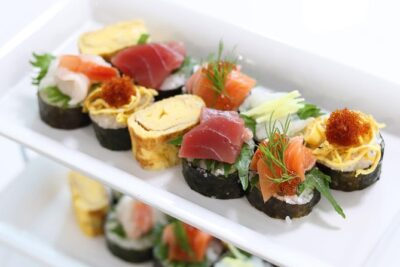 ★ 5.0Private Japanese Cooking Class in Sapporo with Local Chef ShioriFrom $108
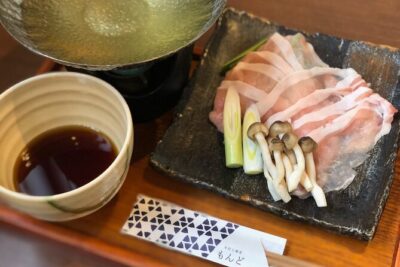 ★ 5.0in Sapporo! Hand-made soba experience and shabu-shabu experience plan of Yezo deer meat (Gibier meat) from HokkaidoFrom $85
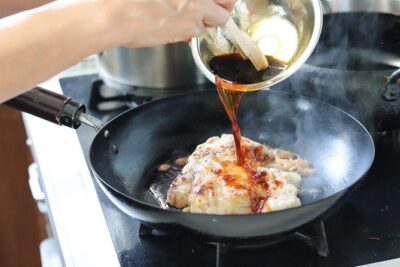 ★ 5.0Private Market Tour and Cooking Class with Kanae, a Sapporo LocalFrom $82
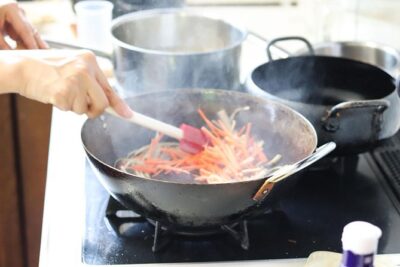 ★ 5.0Private Japanese Cooking Class in Sapporo with Local Host KanaeFrom $72
Browse the lists this tour appears in